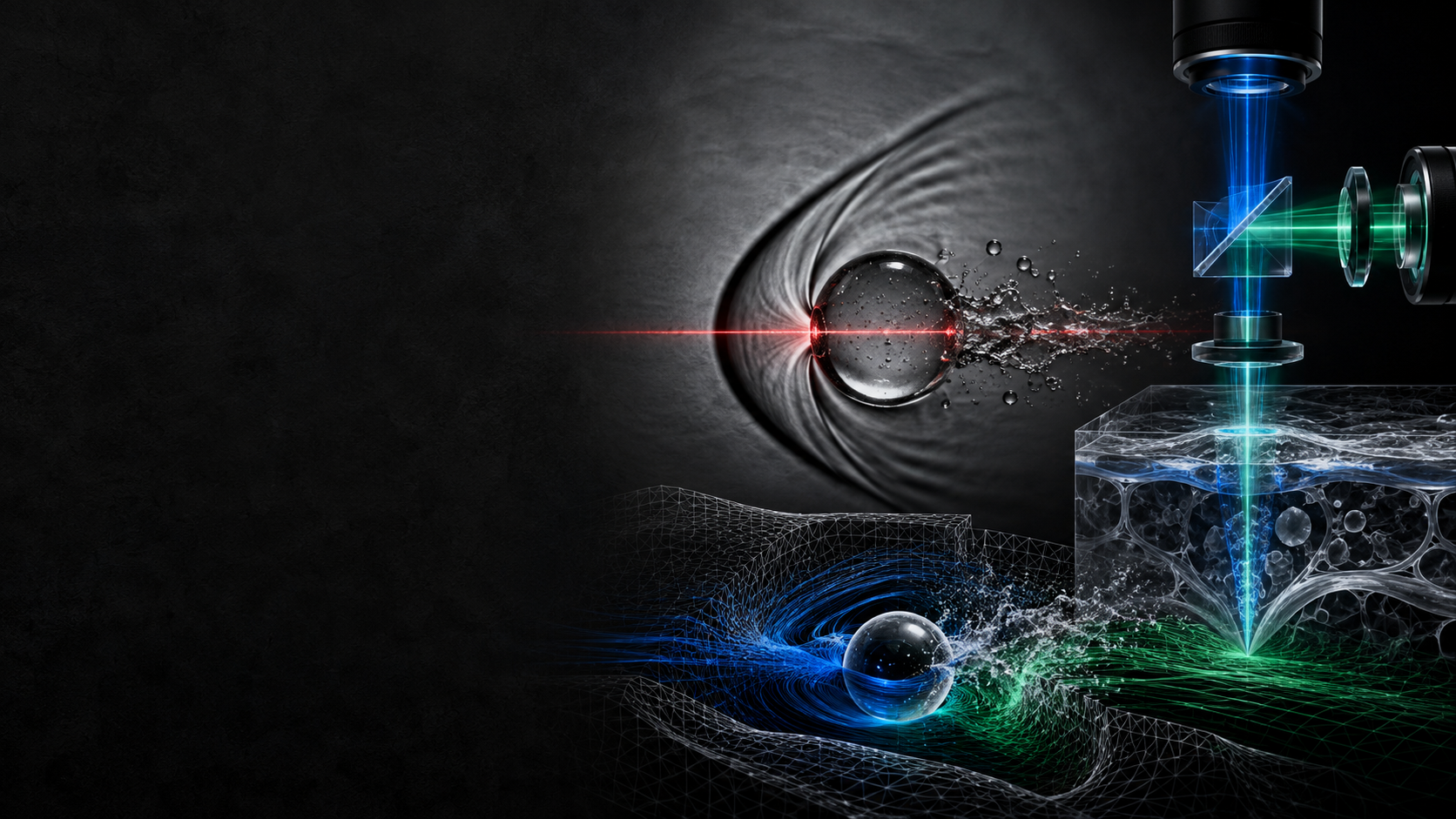
Conceptual visualization linking high-speed droplet diagnostics, optical instrumentation, and computational flow modeling.

Research scientist | optical diagnostics | predictive multiphysics

Awanish Pratap Singh, Ph.D.

High-Speed Optical Diagnostics and Predictive Multiphysics

Developing optical instruments, high-speed experiments, and computational models for fast multiphysics problems, from laser-induced plasma and droplet breakup to multi-megahertz OCT endoscopy and quantitative image reconstruction.

High-speed optical diagnosticsMultiphase and reacting flowsBiomedical OCTComputational modeling
13research articles
8conference proceedings
2doctoral and master's theses
2014-2026research record represented in this portfolio

Research profile

Measurement, modeling, and validation across fast physical systems

My research addresses processes that evolve too quickly, too locally, or across too many coupled scales for a single measurement. I combine optical-system design, time-resolved experiments, image analysis, numerical modeling, and uncertainty assessment to identify the governing mechanisms.

01

Laser-induced plasma and reacting flow

Experiments and simulations of laser energy deposition, blast-wave formation, plasma-kernel evolution, and ignition in gases and atomized fuel-air mixtures.

  • High-speed Schlieren imaging
  • Laser breakdown and ignition
  • Absorbed-energy analysis
  • Finite-volume simulation

02

Impulsively driven multiphase flow

High-speed studies of droplet deformation, acceleration, and breakup under vortex, shock-wave, and laser-induced forcing.

  • High-speed imaging
  • Schlieren and shadowgraphy
  • Droplet response mapping
  • Uncertainty propagation

03

Multi-MHz OCT and biomedical optics

Development and validation of multi-megahertz OCT endoscopy, including rotational synchronization, probe design, controlled pullback, and switchable imaging range.

  • Zemax OpticStudio
  • OCT and FDML lasers
  • Optomechanical prototyping
  • Motor-acquisition synchronization

Selected work

Selected research

These studies are strong evidence for my combined experimental, optical, and computational capabilities.

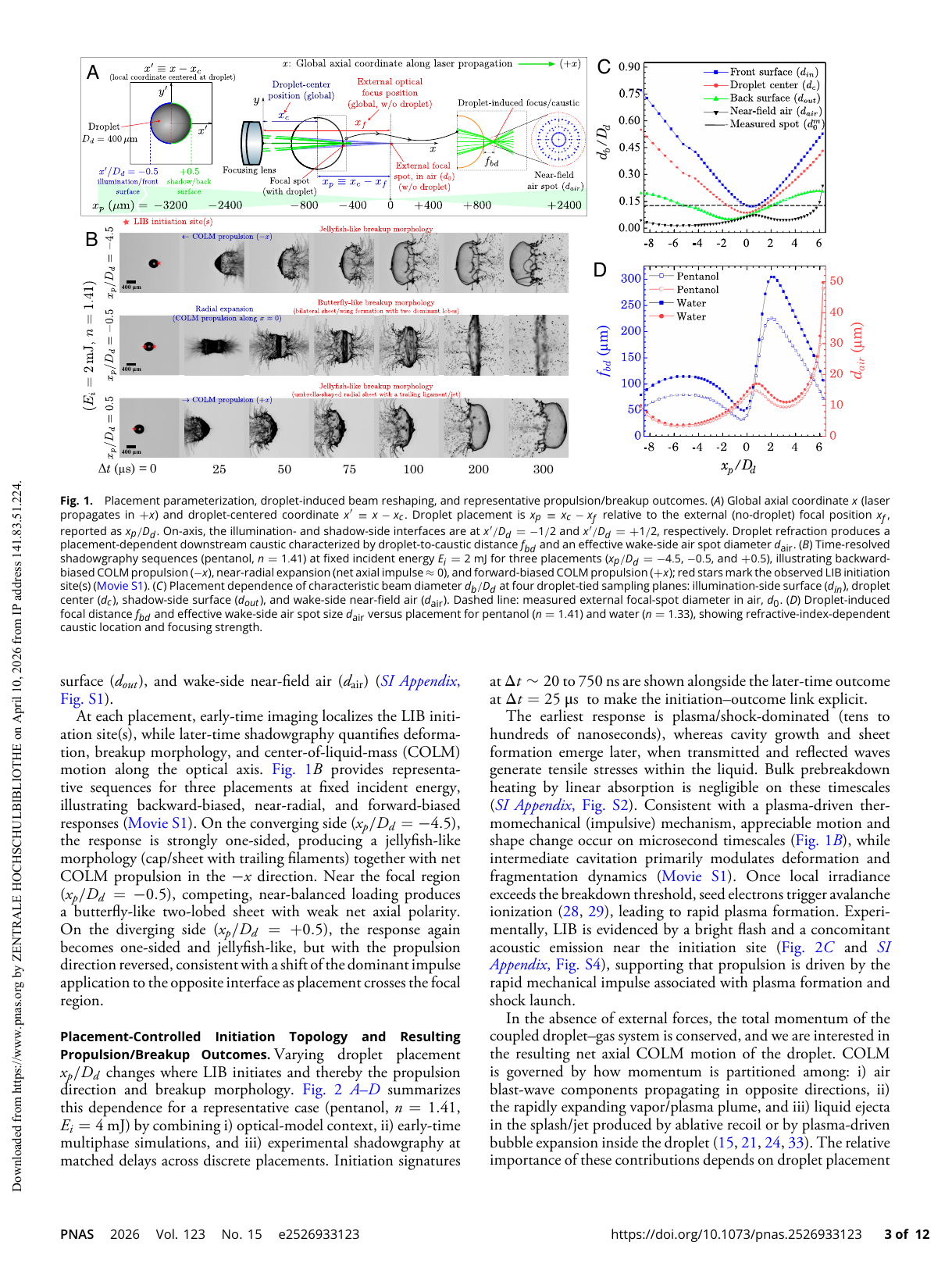
Optical placement diagram and time-resolved shadowgraphs of laser-driven droplet responses.
First-author study | PNAS2026

Predicting and controlling laser-induced breakup and multidirectional propulsion of liquid droplets

Calibrated droplet experiments, aberration-aware optical modeling, uncertainty propagation, and ECOGEN simulations connect focal placement to propulsion and breakup.

View source
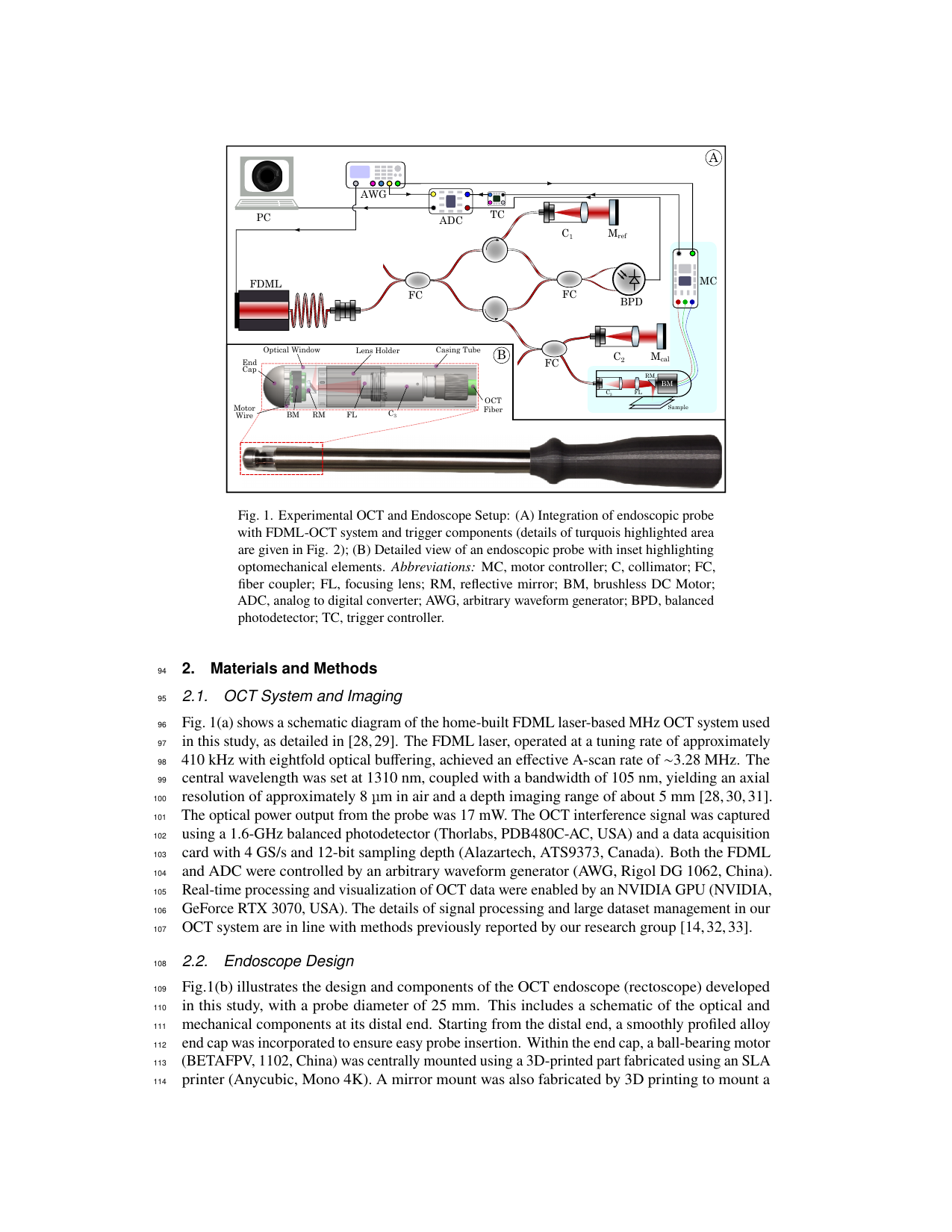
System diagram and photographs of a dual-resolution multi-MHz OCT rectoscope and its distal optical assembly.
Collaborative prototype | JBO2026

Dual-resolution megahertz OCT prototype rectoscope for enhanced visualization

A collaborative dual-resolution prototype integrating switchable imaging range, probe development, synchronized acquisition, and controlled pullback.

View source
First-author study | Applied Energy2019

Spatio-temporal effect of the breakdown zone in laser-initiated ignition

High-speed diagnostics showed that optical breakdown alone did not ensure ignition; plasma-kernel lifetime and breakdown location governed sustained combustion.

View source
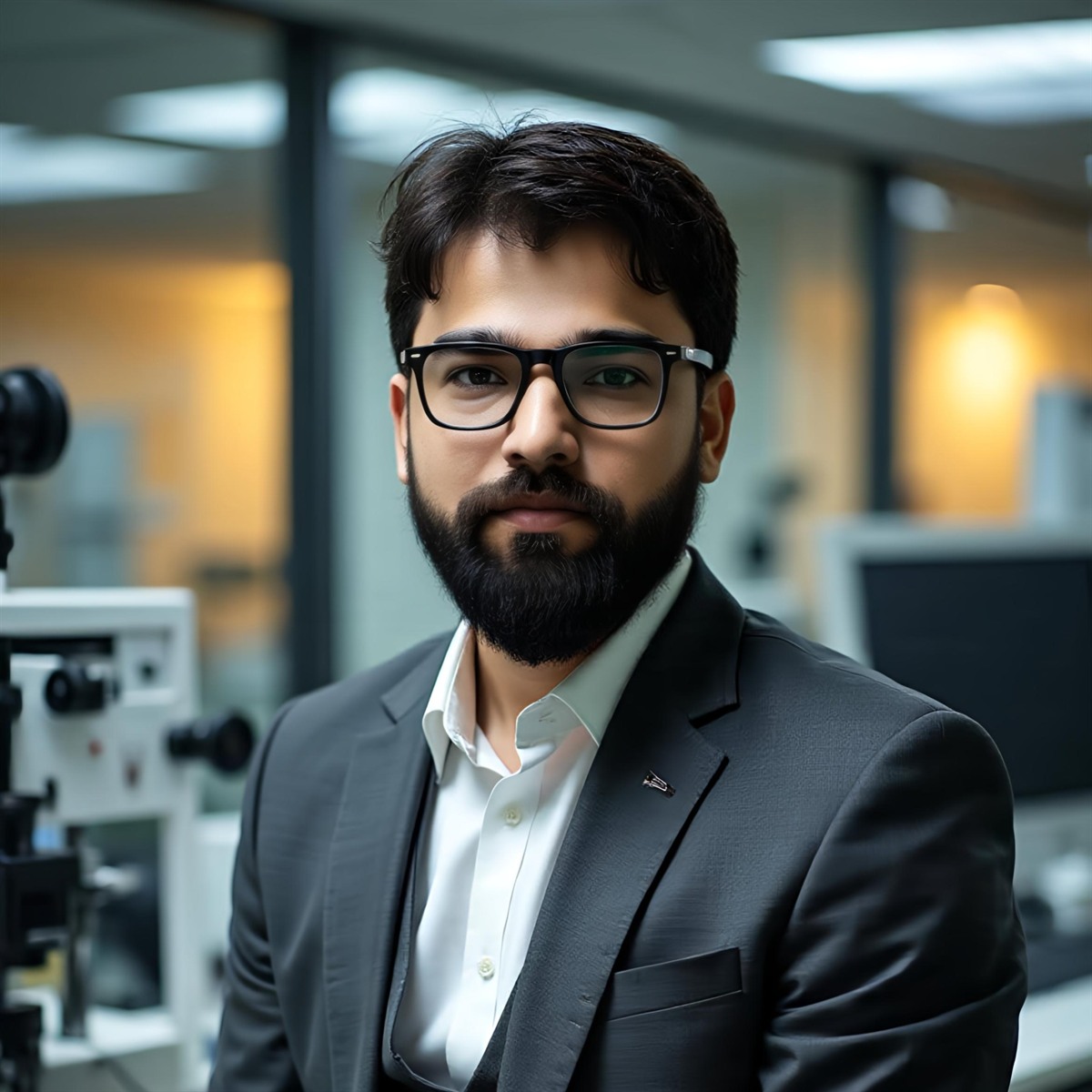
Portrait of Awanish Pratap Singh

About

From measurement to predictive control

I am a research scientist with a Ph.D. in Aerospace Engineering whose work connects optical instrumentation, high-speed flow diagnostics, image analysis, and computational modeling.

My research began with computational fluid dynamics and laser ignition, including development of an experimental facility for laser-induced breakdown in atomized fuel-air mixtures and methods for tracking shock waves and plasma-kernel evolution. I later worked on vortex-droplet, shock-droplet, and laser-droplet interactions, combining time-resolved imaging with physically interpretable models. At the University of Lübeck, I have contributed to multi-megahertz OCT endoscopy through motor-acquisition synchronization, probe design and development, automated pullback, and dual-resolution rectoscopy. Recent first-author work integrates measured breakdown thresholds, aberration-aware optical modeling, high-speed shadowgraphy, uncertainty propagation, and compressible multiphase simulation to predict laser-driven droplet propulsion and breakup. Across these areas, I focus on the same problem: how to design a measurement, model the governing physics, quantify uncertainty, and turn complex transient behavior into a reproducible engineering result.

Research collaboration

Research collaboration and scientific engineering

I am interested in optical instrumentation, high-speed diagnostics, transient multiphase phenomena, biomedical imaging, computational modeling, and reproducible analysis workflows.

Contact Awanish